

De Wetenschap van Huidregeneratie: Waarom Koperpeptiden de Moderne Huidverzorging Veranderen
Na je 25e verandert er iets fundamenteels onder het oppervlak van je huid.
Dit is geen marketingtaal: het is biologie. De collageenproductie begint haar geleidelijke afname. Celvernieuwing wordt minder efficient. De natuurlijke herstelsignalering van de huid verzwakt. Na verloop van tijd manifesteren deze biologische veranderingen zich zichtbaar: fijne lijntjes, verlies van stevigheid, ongelijke textuur en een tragere hersteltijd van omgevingsstress.
De meeste huidverzorgingsproducten richten zich op hydratatie of oppervlakte-exfoliatie. Maar echte huidgezondheid hangt af van iets veel dieperliggends:
Cellulaire communicatie.
Begrijpen hoe de huid zich regenereert — en hoe je dat proces kunt ondersteunen — is de basis van moderne regeneratieve huidverzorging. En in het hart van deze revolutie ligt een van de meest onderzochte moleculen in de dermatologie: koperpeptiden.
Deel 1: Wat “Huidregeneratie” Werkelijk Betekent
Huidregeneratie verwijst naar het biologische proces waarbij de huid:
-
Beschadigd weefsel herstelt
-
Nieuw collageen en elastine produceert
-
Structurele eiwitten herbouwt
-
Ontsteking vermindert
-
De barrièreintegriteit behoudt
Bij jongere huid is dit proces zeer efficient. Groeifactoren en signaalpeptiden communiceren constant met fibroblasten, de cellen die verantwoordelijk zijn voor de collageenproductie. Zie het als een goed georganiseerde bouwplaats waar werknemers duidelijke instructies krijgen en materialen op tijd arriveren.
Naarmate we ouder worden, worden deze signaleringspaden minder actief. De bouwplaats wordt stiller. De instructies raken vervormd. Materialen worden schaars.
Het resultaat is niet alleen “rimpels”. Het is een afname van de biologische responsiviteit — een huid die simpelweg niet meer weet hoe ze zichzelf zo effectief kan herstellen.
Deel 2: De Ontdekking van Koperpeptiden
Het verhaal van koperpeptiden begint niet in een cosmeticalaboratorium, maar in de studie van menselijk bloed.
In de jaren '70 deed Dr. Loren Pickart een fascinerende ontdekking: de regeneratieve eigenschappen van jong menselijk bloed waren gedeeltelijk te danken aan een specifiek kopertransporterend peptide. Dit molecuul, dat van nature voorkomt in menselijk plasma, leek de sleutel te bevatten tot weefselherstel.
Hij isoleerde het en noemde het GHK-Cu (Glycyl-L-Histidyl-L-Lysine koper).
Wat dit molecuul zo bijzonder maakt, is zijn structuur. Koperpeptiden zijn precies wat de naam suggereert: een combinatie van koperionen en peptiden.
-
Peptiden zijn korte ketens van aminozuren. Zie ze als eiwitfragmenten. Wanneer topisch toegepast, functioneren ze als signalen voor je huidcellen: kleine boodschappers die instructies afleveren.
-
Koper is een essentieel spoorelement voor vrijwel elke levende cel. In de huid fungeert koper als cofactor voor kritieke enzymen bij het vernetten van collageen en elastine. Zonder koper kan je lichaam nieuwe collageenvezels niet stabiliseren; ze blijven zwak en ongeorganiseerd.
Wanneer een peptide zich bindt aan koper, ontstaat er een zeer stabiel en biobeschikbaar complex. Het peptide fungeert als het transportvoertuig, dat het koper veilig naar de huidcellen brengt waar het het meest nodig is.
Deel 3: De Biologie van GHK-Cu
In zijn natuurlijke staat speelt GHK-Cu verschillende vitale rollen in de huidbiologie:
Stimulatie van collageensynthese : Koperpeptiden signaleren fibroblasten om de productie van collageen, elastine en glycosaminoglycanen (zoals hyaluronzuur) te verhogen. Door de structurele integriteit van de dermis te verbeteren, helpen ze fijne lijntjes, rimpels en slappe huid te verminderen.
Ondersteuning van elastineproductie : Naast collageen zorgt elastine voor de “veerkracht” waardoor de huid terugveert. Koperpeptiden helpen dit kritieke eiwit te behouden.
Verbeterde wondgenezing : Koper speelt een sleutelrol in de ontstekings- en proliferatieve fasen van wondgenezing. Het bevordert de verwijdering van beschadigde matrixcomponenten en stimuleert de afzetting van nieuw, gezond weefsel.
Vermindering van zichtbare ontsteking : Terwijl koperpeptiden helpen bij de genezingsfase van ontsteking, kalmeren ze tegelijkertijd chronische ontsteking, waardoor ze geschikt zijn zelfs voor gevoelige huid.
Bevordering van weefselvernieuwing : Dit is bijzonder belangrijk voor het minimaliseren van het uiterlijk van acnelittekens en het verbeteren van de algehele huidtextuur.
Wetenschappelijke studies hebben aangetoond dat koperpeptiden helpen genen te activeren die betrokken zijn bij weefselherstel, terwijl ze genen onderdrukken die verband houden met ontsteking en afbraak.
Simpel gezegd: Ze helpen de balans te herstellen in verouderende huid.
Echter — en dit is cruciaal — de niveaus van GHK-Cu nemen aanzienlijk af met de leeftijd. Dit is een van de redenen waarom het regeneratieve vermogen vertraagt na de midden twintig.
Deel 4: Waarom Agressieve Anti-veroudering Aan Populariteit Verliest
Jarenlang volgde anti-verouderende huidverzorging een voorspelbaar draaiboek:
-
Hoge-concentratie retinoïden
-
Sterke chemische exfolianten
-
Frequente resurfacing-behandelingen
Hoewel deze benaderingen de celvernieuwing kunnen verhogen, tasten ze vaak de huidbarrière aan bij overmatig gebruik. Het resultaat? Roodheid, gevoeligheid, uitdroging en soms, paradoxaal genoeg, versnelde veroudering door chronische irritatie.
De moderne dermatologische verschuiving gaat richting het ondersteunen van de huid, niet het forceren ervan.
In plaats van het oppervlak af te schrapen of te irriteren, richt regeneratieve huidverzorging zich op:
-
Cellulaire signalering
-
Barrièreondersteuning
-
Vermindering van ontsteking
-
Ondersteuning van collageen op lange termijn
Koperpeptiden sluiten perfect aan bij deze filosofie. Ze assisteren in plaats van aan te vallen. Ze werken met de biologie van je huid in plaats van deze te vervangen.
Deel 5: De Multifunctionele Voordelen van Koperpeptiden
In tegenstelling tot veel ingrediënten met één functie — een zuur dat alleen exfolieert, een antioxidant die alleen beschermt — zijn koperpeptiden echte multitaskers. Ze bootsen het natuurlijke genezingsproces van het lichaam na en bieden voordelen die meerdere tekenen van veroudering tegelijk aanpakken.
1. Collageen- en Elastinesynthese
Dit blijft het hoofdact. Door de activiteit van fibroblasten te ondersteunen, helpen koperpeptiden de dermale structuur te herstellen die de huid stevig en veerkrachtig houdt.
2. Wondgenezing en Versnelde Huidherstelling
Hier schitteren koperpeptiden echt. Hun rol in de genezingscascade maakt ze uitzonderlijk voor het genezen van beschadigde huidbarrières, het verminderen van roodheid na een procedure en het minimaliseren van littekenvorming.
3. Krachtige Antioxidantbescherming
Koperpeptiden hebben natuurlijke antioxiderende eigenschappen, die helpen vrije radicalen van UV-blootstelling en vervuiling te neutraliseren. Daarnaast verhogen ze de activiteit van de eigen antioxiderende enzymen van het lichaam, zoals superoxidedismutase (SOD), voor een ingebouwde verdediging.
4. Ontstekingsremmende Effecten
Chronische, laaggradige ontsteking verzwakt geleidelijk de structurele eiwitten van de huid. Koperpeptiden helpen deze “inflammaging” te kalmeren terwijl ze het acute genezingsproces blijven ondersteunen.
5. Steviger, Gladdere Huid
Door een betere microcirculatie en angiogenese (vorming van nieuwe bloedvaten) te bevorderen, verbeteren koperpeptiden de toevoer van voedingsstoffen en zuurstof naar huidcellen. Een gezondere bloedstroom betekent een gezondere, stralendere huid.
Deel 6: De Kritieke Rol van de Huidbarrière
Hier is iets dat vaak over het hoofd wordt gezien in discussies over regeneratie:
Regeneratie kan niet effectief plaatsvinden als de huidbarrière gecompromitteerd is.
De huidbarrière beschermt tegen:
-
Waterverlies (transepidermaal waterverlies of TEWL)
-
Omgevingsvervuiling
-
Irritatie en sensibilisatie
-
Microbiële onbalans
Overexfoliatie en agressieve actieve stoffen verzwakken deze barrière, wat leidt tot gevoeligheid, roodheid, uitdroging en, ja, voortijdige veroudering.
Daarom combineren regeneratieve routines vaak signaalmoleculen (zoals koperpeptiden) met lipidenrijke botanische oliën die de barrière versterken. Wanneer de barrière sterk is, werken regeneratieve signalen efficienter.
Deel 7: Koperpeptiden vs. Andere Zwaargewichten in de Huidverzorging
Om de plaats van koperpeptiden in een routine te begrijpen, helpt het ze te vergelijken met andere gevestigde ingrediënten.
vs. Retinoïden:
Retinoïden werken door celvernieuwing en collageenproductie te versnellen, vaak met irritatie, schilfering en “purging” als bijwerkingen. Koperpeptiden werken met het natuurlijke genezingsproces van de huid om weefsel te regenereren zonder irritatie. Veel gebruikers vinden koperpeptiden de perfecte “herstellende” partner voor retinol-rustavonden, of voor wie retinoïden helemaal niet verdraagt.
vs. Vitamine C:
Vitamine C is een krachtige antioxidant die beschermt tegen omgevingsschade en de huid verhelderen. Koperpeptiden richten zich meer op structureel herstel en regeneratie. Hoewel beide antioxidantbescherming bieden, dienen ze verschillende hoofddoelen. (Opmerking: Er is discussie over het samen gebruiken; de meeste experts raden Vitamine C 's ochtends en koperpeptiden 's avonds aan.)
vs. Standaard Peptiden:
De meeste standaard peptiden zijn eenmalige signaalmoleculen. Koperpeptiden bieden een meer holistische, multi-signaalbenadering — en functioneren in wezen als een mini groeifactorserum.
Deel 8: Hoe Koperpeptiden te Gebruiken (De Regeneratieve Lagenmethode)
Om de voordelen te maximaliseren, is de toepassingsvolgorde belangrijk.
Stap 1: Reinig
Begin met een schoon, droog gezicht om optimale penetratie te garanderen.
Stap 2: Signaleer — Breng het Koperpeptideserum Aan
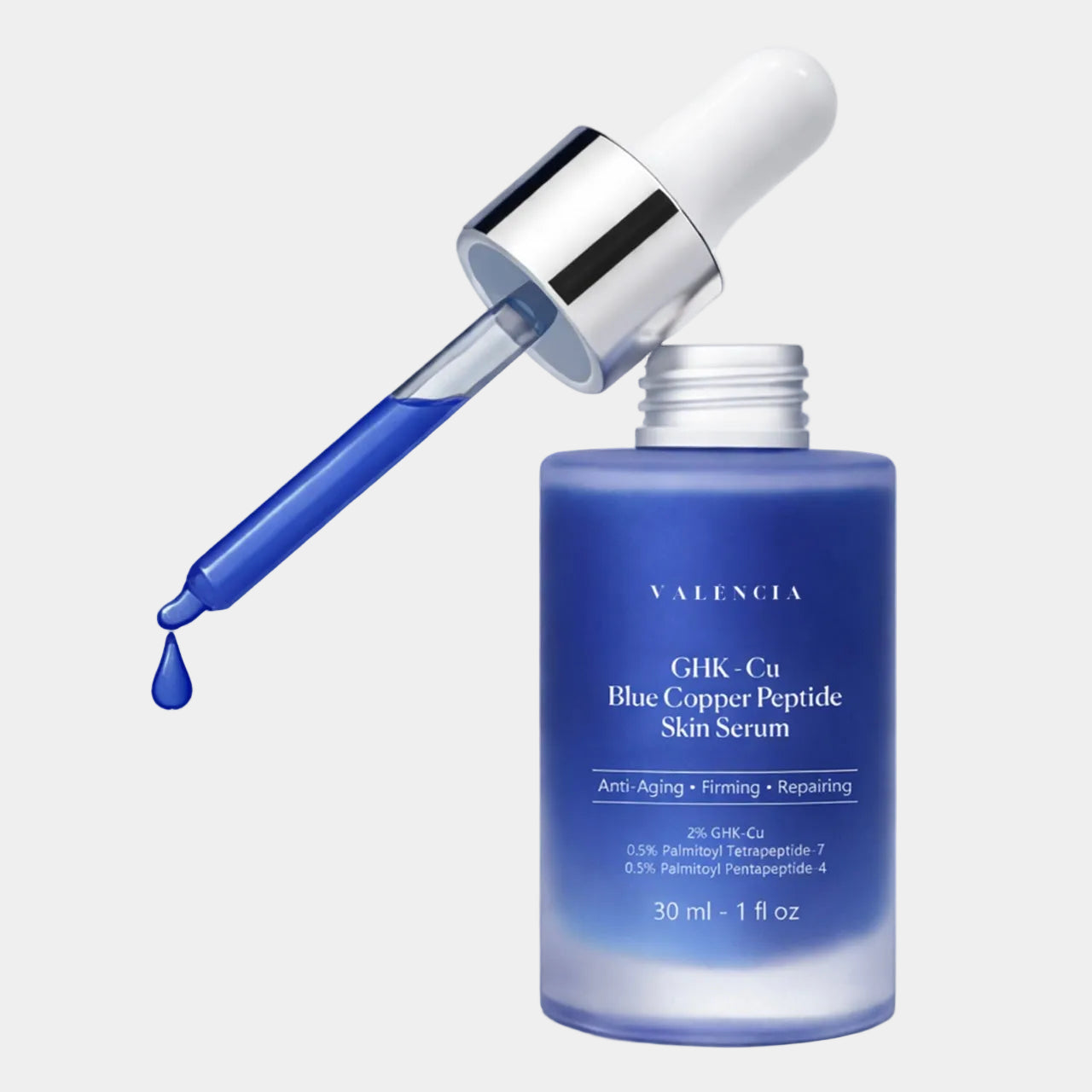
Breng je koperpeptideserum aan op licht vochtige huid. Dit helpt bij de absorptie. Producten zoals Koperpeptideserum leveren gestabiliseerd GHK-Cu direct aan de huid waar het de cellulaire communicatie kan ondersteunen.
Stap 3: Wacht (De Gouden Regel)
Dit is cruciaal. Koperpeptiden zijn actieve moleculen. Wacht minstens 10 tot 15 minuten voordat je volledige absorptie hebt bereikt, voordat je je volgende product aanbrengt. Dit voorkomt interferentie met andere actieve stoffen en zorgt ervoor dat de peptiden hun doelen bereiken.
Stap 4: Herstel — Breng Barrièreondersteunende Oliën Aan
Terwijl peptiden de signalering afhandelen, vereist de barrièreintegriteit lipiden. Hoogwaardige botanische oliën helpen:
-
Transepidermaal waterverlies te verminderen
-
Flexibiliteit te herstellen
-
Zachtheid te verbeteren
-
Herstel na behandeling te ondersteunen
Mixen zoals Skin Bomb Oil complementeren regeneratieve serums door de barrière te versterken en zichtbare glans te verhogen. Samen creëren peptiden en lipiden een evenwichtige regeneratieve omgeving.
Stap 5: Bescherm — Ochtendlijke Zonnebrandcrème
's Ochtends altijd afsluiten met SPF 30+. Koperpeptiden helpen UV-schade te herstellen, maar kunnen zonbescherming niet vervangen.
Opmerking over Interacties
Er is een legitieme discussie over het mixen van koperpeptiden met sterke Vitamine C (L-ascorbinezuur) of hoge-concentratie AHA/BHA. De conservatieve aanpak: gebruik Vitamine C 's ochtends, koperpeptiden 's avonds. Als je zuren gebruikt, breng ze dan op een apart moment aan of wacht de volledige 15 minuten na het aanbrengen van het peptide.
Deel 9: Wie Profiteert het Meest van Regeneratieve Huidverzorging
Koperpeptiden zijn opmerkelijk veelzijdig en geschikt voor bijna alle huidtypes, maar bepaalde groepen profiteren bijzonder:
-
Verouderende Huid: Wie fijne lijntjes, verlies van stevigheid en dunner wordende huid opmerkt
-
Beschadigde Huidbarrière: Wie gevoeligheid, roodheid of huid gecompromitteerd door overexfoliatie heeft
-
Acne-gevoelige Huid/Littekens: Wie op zoek is naar snellere genezing van actieve uitbraken en littekenremodellering
-
Post-procedure Huid: Wie herstelt van professionele behandelingen
-
Wie Op Zoek Is Naar “Prejuvenatie”: Zelfs op je 20e en 30e, wie de huidmatrix wil ondersteunen en voortijdige veroudering wil voorkomen
Deze aanpak gaat niet over een transformatie van de ene op de andere dag. Het gaat om geleidelijke structurele verbetering en huidlangleefheid.
Deel 10: Het Nieuwe Paradigma — Huidgezondheid Boven Anti-veroudering
De schönheidsindustrie beweegt weg van de agressieve “anti-veroudering” boodschap. De term zelf impliceert een strijd voeren die niet gewonnen kan worden.
De nieuwe aanpak is:
-
Huidlangleefheid
-
Huidgezondheid
-
Cellulaire veerkracht
-
Biologisch evenwicht
Koperpeptiden vertegenwoordigen deze evolutie perfect.
In plaats van snelle vernieuwing te forceren door irritatie, ondersteunen ze de aangeboren herstelsystemen van de huid. In plaats van de barrière af te schrapen voor korte termijn glans, werken ze in harmonie met barrièreondersteunende lipiden. In plaats van een transformatie van de ene op de andere dag te beloven, bieden ze geleidelijke structurele verbetering.
Veroudering wordt niet alleen veroorzaakt door droogheid. Het wordt beïnvloed door micro-ontsteking, omgevingsoxidatieve stress, collageenafbraak en verminderde barrièrefunctie. Koperpeptiden pakken dit allemaal aan, niet door agressie, maar door slimme biologische ondersteuning.
Daarom worden ze steeds vaker gebruikt in professionele hersteltbehandelingen na procedures. Daarom bevelen dermatologen ze aan voor gecompromitteerde huid. Daarom hebben ze hun plaats verdiend naast retinoïden en Vitamine C in het geavanceerde huidverzorgingsarsenaal.
Deel 11: Hoe Realistische Resultaten Eruitzien
Koperpeptiden zijn geen snel-oplossing ingrediënt. Ze werken op biologisch niveau en moedigen je huid aan om zich te gedragen als een jongere, gezondere huid.
Resultaten worden meestal merkbaar na 8 tot 12 weken consistent gebruik:
-
Week 2-4: Betere hydratatie en zachtheid van de huid; minder roodheid en irritatie
-
Week 4-8: Merkbare verbetering in textuur en stevigheid; de huid ziet er rustiger en veerkrachtiger uit
-
Week 8-12: Zichtbare vermindering van fijne lijntjes; betere huidtint en helderheid; steviger, elastischer gevoel
Omdat deze resultaten voortkomen uit structurele verbetering in plaats van oppervlaktemanipulatie, duren ze langer dan snelle oplossingen.
Het Eindoordeel: Een Regeneratieve Revolutie
Veroudering kan niet worden gestopt. Dat is niet het doel.
Maar huidregeneratie kan worden ondersteund. Cellulaire communicatie kan worden verbeterd. Barrièreintegriteit kan worden behouden. Collageenafbraak kan worden gebalanceerd met collageensynthese.
Begrijpen hoe deze systemen op elkaar inwerken stelt je in staat huidverzorging te kiezen die met je biologie werkt, niet ertegen.
Koperpeptiden vertegenwoordigen de voorhoede van deze filosofie. Het gaat niet om verandering forceren door irritatie. Het gaat om slimme ondersteuning: je huid de hulpmiddelen geven die het nodig heeft om te doen wat het vroeger van nature deed.
Gecombineerd met barrièreherstellende botanische oliën en consistente zonbescherming, creëren ze een uitgebreide strategie om een sterke, responsieve en gezonde huid na verloop van tijd te behouden.
De toekomst van anti-veroudering is helemaal geen anti-veroudering. Het is regeneratief. Het is ondersteunend. Het is biologisch.
En koperpeptiden lopen voorop.